Real Rainforest Raw Tualang Wild Honey Royal Jelly
RM140.00
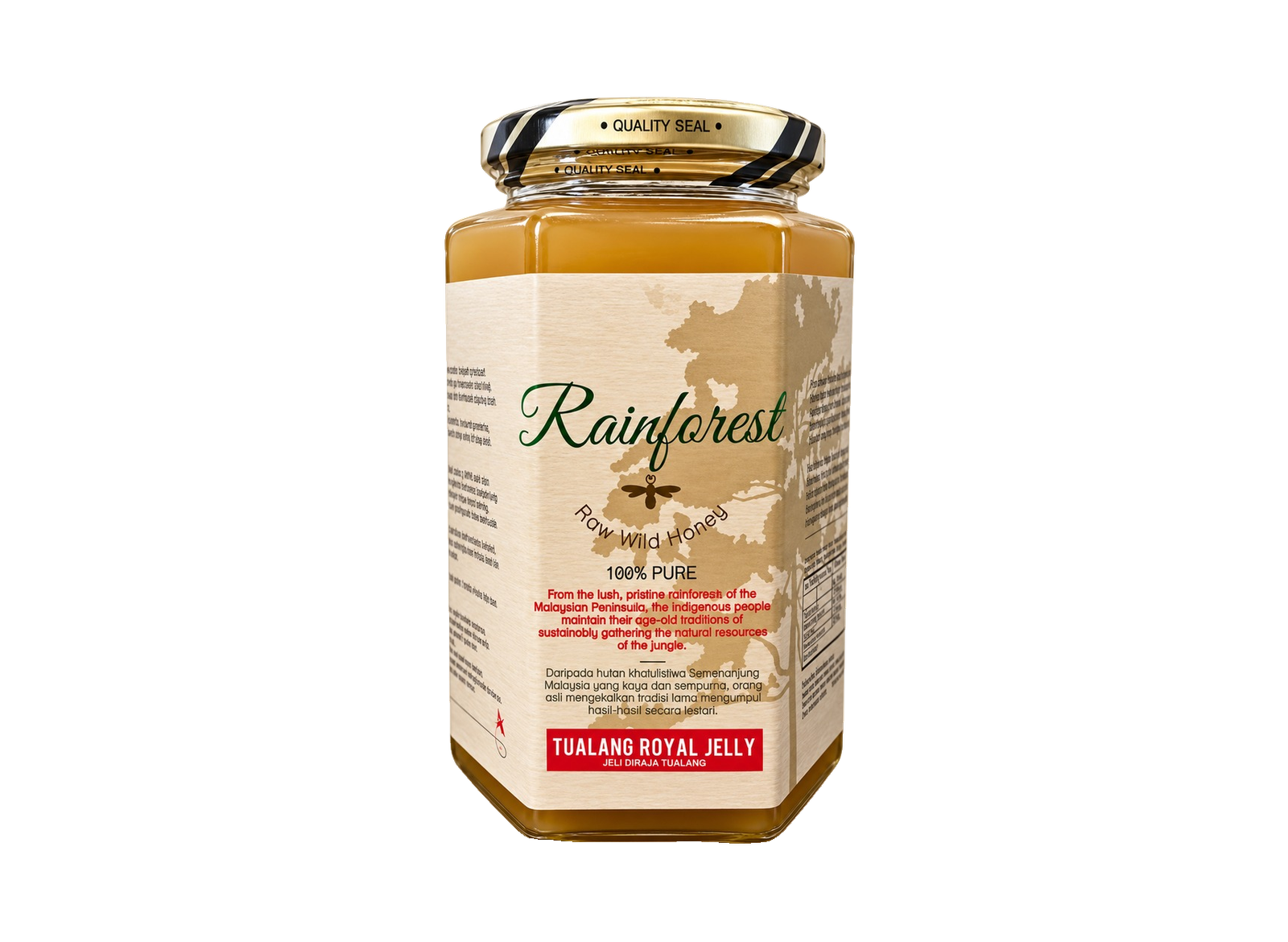
Raw wild Tualang honey blended with royal jelly. Never heated. 850g jar.
Our Wild Tualang Honey, Blended with Royal Jelly.
Royal jelly is the rich, creamy substance worker bees make to feed their queen. It’s been prized in many cultures for centuries.
We’ve collected natural royal jelly which is naturally mixed with raw Rainforest Tualang Wild Honey, harvested by hand by indigenous honey collectors from wild giant honey bee hives high in the Tualang trees of Peninsular Malaysia as this is the best way to preserve natural royal jelly which spoils easily.
The result keeps the deep, floral, slightly tangy character of Tualang honey, with a smoother, creamier texture and a subtle tang from the royal jelly.
What Makes It Special?
Wild Tualang Honey
Raw, unfiltered honey from wild rainforest bees, never heated or pasteurised.
Real Royal Jelly
As these are wild hives (i.e. nature doesn’t build in straight lines), it is impossible to only harvest natural wild royal jelly as the queens are not segregated to limited areas of the hives. The royal jelly is harvested close to the center of the hives but comes naturally mixed with regular tualang honey.
Nothing Else Added
Just honey and royal jelly naturally occurring together.
How to Enjoy It
- A daily spoonful: on its own, or on the tongue.
- Warm drinks: stirred into warm (not hot) water, tea or milk.
- Breakfast: over yogurt, oats or toast.
Real Rainforest Raw Tualang Wild Honey with Royal Jelly. Wild honey, nothing artificial.
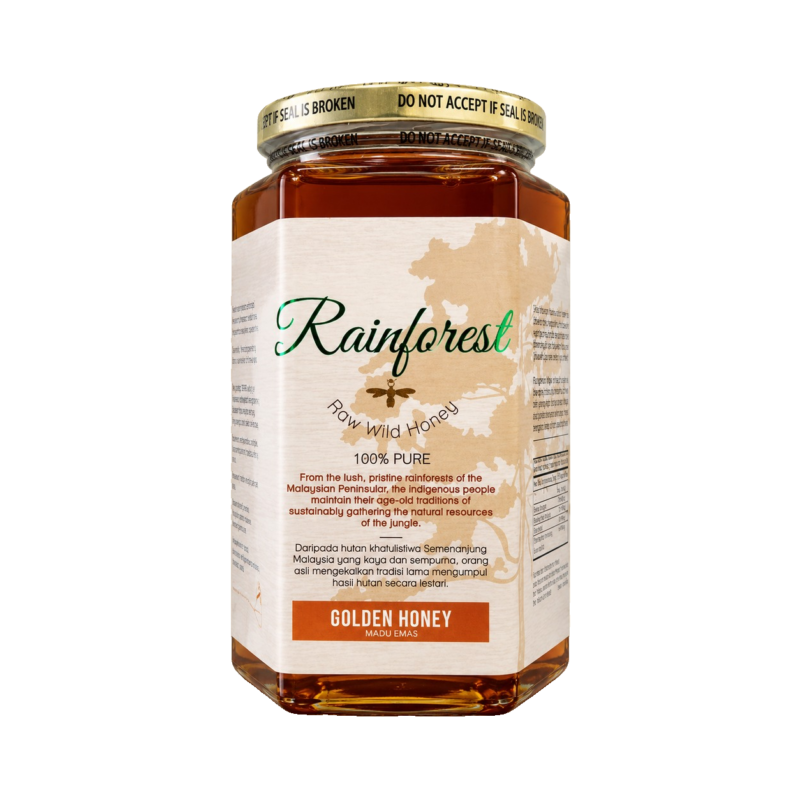
Also available: Real Rainforest Raw Tualang Wild Honey
Ingredients
Raw wild Tualang honey, naturally mixed with raw wild Tualang royal jelly (~5%)
Not suitable for babies under 12 months.
Allergy warning: Royal jelly can cause serious allergic reactions as it contains high concentrations of peptides, especially in people with asthma or allergies to bees, bee stings or pollen. Not recommended during pregnancy or breastfeeding without medical advice.
Storage and Handling
- Store at room temperature in a cool, dry cupboard, away from direct sunlight and the stove.
- No need to refrigerate. The fridge speeds up crystallisation.
- Shelf life: best before the date on the jar (3 years from bottling). But really, honey has been found to be good even after hundreds of years if kept sealed and uncontaminated.
- Always use a clean, dry spoon and close the lid tightly. Raw honey can absorb moisture from the air, and water in the jar can make it ferment.
- Crystallisation is natural. Raw honey thickens and sets over time; it’s a sign it hasn’t been heat-treated. To make it runny again, stand the jar in warm (not boiling) water and stir gently. Avoid the microwave.
- Royal jelly is delicate. That’s why naturally occurring royal jelly is usually found mixed with raw honey to keep it from spoiling easily.
- If in doubt, throw it out. If it smells sour or alcoholic, fizzes, or shows any mould, please discard it.
FAQs
What is royal jelly?
A highly concentrated milky secretion made by worker honey bees to feed the queen bee and young larvae.
How much royal jelly is in each jar?
This is naturally occurring but usually contains about 5% of royal jelly. Any more and it will start to spoil.
Is it safe for everyone?
No. Royal jelly can trigger allergic reactions, sometimes severe, particularly in people with asthma or allergies to bees or pollen. It isn’t suitable for children under 12 months, and pregnant or breastfeeding women should check with their doctor first.
Why has my honey gone thick or grainy?
That’s natural crystallisation, and a good sign your honey is raw and hasn’t been heat-treated. Stand the jar in warm water and stir gently to loosen it.
Can I cook with it?
Yes, though heat changes the flavour of raw honey. To enjoy it at its best, stir it into warm (not boiling) drinks or drizzle it over food after cooking.